Soggy Spots in a Dry Yard? What Your Drain Field Is Trying to Tell You
Oklahoma summers bake the ground hard, so a wet patch of grass in July should get your attention fast. When the rest of your lawn is brown and crunchy, a soggy spot over your septic system is rarely innocent. That moisture is often effluent rising to the surface because your drain field can no longer absorb wastewater the way it should. Homeowners in Inola, Claremore, Broken Arrow, and the greater Tulsa area see this problem every summer, and many wait too long to act. Ignoring a saturated drain field leads to sewage backups, foul odors, and repair bills that climb by the week. The good news is that a wet spot caught early can often be corrected before the entire system fails. This guide explains what those soggy spots mean, why they show up during dry weather, and what you should do next. Read on before that small wet patch turns into a full drain field replacement.
Why a Drain Field Creates Soggy Spots During Dry Summer Weather
A drain field works by dispersing treated wastewater from your septic tank into the soil, where natural bacteria finish the cleaning process. When everything works correctly, that water absorbs below the surface and you never see it. Soggy spots appear when the soil can no longer accept water as fast as your household produces it. In a dry Oklahoma summer, there is no rain to blame, so surfacing water points directly at the septic system. The contrast actually makes summer the easiest season to spot drain field failure. Wet ground, unusually green grass stripes, or a sewage smell near the lateral lines all signal trouble. Understanding the cause behind the moisture is the first step toward the right fix.
A Clogged Drain Field Pushes Wastewater to the Surface
The most common reason for soggy spots is a clogged drain field, and the clog usually starts inside your septic tank. Every septic tank holds a layer of solids at the bottom and a layer of grease and scum at the top. When the tank goes too long without pumping, those solids flow out with the liquid and enter the lateral lines. Solids coat the gravel and soil around the pipes, forming a dense layer called a biomat that water cannot pass through. Once the soil is sealed off, wastewater has nowhere to go but up. That is when you see standing water, spongy turf, and dark green streaks over the lines. A clogged drain field will not heal on its own, and every flush makes the saturation worse. Regular pumping is the single best way to prevent this failure, which is why skipped maintenance is the number one cause of drain field problems we see.
Summer habits speed up the clogging process in ways many homeowners never consider. Houseguests, kids home from school, extra laundry, and frequent showers all increase daily water flow into the tank. Higher flow stirs up solids and pushes them toward the outlet before they can settle. Garbage disposals add ground food waste that septic bacteria struggle to break down. Harsh cleaners and bleach used during summer deep cleaning can kill the bacteria your tank depends on. Each of these habits sends more solids into the drain field and shortens its life. If your soggy spot appeared after a busy stretch of household activity, overloading is a likely factor. Cutting back on water use can slow the damage, but it will not remove a biomat that has already formed.
Diagnosing a clogged drain field takes professional equipment and trained eyes, not guesswork. A septic technician will check tank levels, inspect the outlet baffle, and evaluate how the lateral lines are accepting water. In some cases, pumping the tank and reducing water use gives a mildly stressed field time to recover. In other cases, the lines need jetting, aeration, or partial replacement to restore absorption. The only way to know is to have the system evaluated before the damage spreads. Waiting almost always narrows your options and raises the cost. Seeing wet spots over your lateral lines right now? Click here for our septic drain field service and get a professional diagnosis. A quick inspection today can save you thousands in replacement costs later.

Compacted Soil Around the Drain Field Blocks Absorption
Soil compaction is a drain field killer that most homeowners never think about until water starts surfacing. A drain field only works when the soil around it stays loose enough for water and air to move through it. Every time a vehicle, trailer, or piece of heavy equipment drives over the lateral lines, the soil compresses a little more. Compacted soil loses the tiny air pockets that absorb wastewater and support the bacteria that treat it. Over time, the field loses capacity even if the tank has been pumped on schedule. Summer is prime time for this damage because of mowing with heavy zero turn mowers, parking boats and campers, and hosting gatherings with cars on the lawn. Crushed or shifted pipes from vehicle weight make the problem even worse. The result is wastewater pooling above ground because it cannot penetrate the dense soil below.
Livestock and outdoor projects cause the same compaction problem across rural properties in Inola, Pryor Creek, and Wagoner. Horses and cattle grazing over lateral lines pack the soil down with every step. Above ground pools, sheds, playsets, and gravel pads placed over the field block evaporation and add constant weight. Even a well meaning landscaping project can bury the field under fill dirt that smothers it. Drain fields need open, grassy, undisturbed ground to breathe and function. Oklahoma clay soils are especially vulnerable because they compact easily and drain slowly to begin with. Once clay compacts around your lateral lines, water sits in the trenches instead of soaking away. That trapped water eventually rises, and you find the soggy spot on your next walk across the yard.
Protecting your drain field from compaction is simple once you know where the field sits. Keep all vehicles, trailers, and heavy equipment off the area permanently, not just most of the time. Fence livestock away from the lateral lines and relocate any structures sitting on top of them. Mow with the lightest equipment practical and avoid crossing the field when the ground is wet. If compaction damage has already occurred, a professional can assess how much absorption capacity remains. Sometimes soil fracturing or line repairs can restore function; severe cases may require new laterals in fresh soil. A septic professional can mark your field boundaries so you know exactly what ground to protect. That small step preserves the most expensive component of your entire septic system.
Root Intrusion and Broken Lines Cause Drain Field Wet Spots
Tree roots are relentless, and in a dry summer they hunt for water with surprising force. Your drain field is the wettest, most nutrient rich soil on the property, which makes it a target. Roots from trees and large shrubs grow toward the lateral lines and slip into any joint, crack, or perforation they find. Once inside, roots expand, block the flow of effluent, and force wastewater out through the damaged sections. The result is a concentrated soggy spot near the intrusion point rather than even saturation across the field. Willows, silver maples, sweetgums, and elms are among the worst offenders in northeast Oklahoma. Drought conditions make root intrusion more aggressive because surface moisture disappears. A wet spot near a tree line during a dry July is a strong clue that roots have found your lines.
Broken or separated pipes create the same symptom without any help from trees. Older systems with clay or thin walled pipe are prone to cracking as soil shifts and settles. Oklahoma clay expands when wet and shrinks hard during drought, and that movement stresses buried lines year after year. A crushed section from vehicle traffic or a joint pulled apart by settling dumps effluent into one spot. That spot stays wet, smells foul, and often grows the greenest grass in the yard. You may also notice slow drains inside the house or gurgling sounds when the washing machine empties. These symptoms mean wastewater is escaping before it can spread across the full field. Left alone, the leak erodes soil, attracts insects, and can contaminate nearby wells or ponds.
Finding the exact failure point requires professional locating and inspection tools. A trained technician can uncover the damaged section, confirm the cause, and recommend a targeted repair. Cutting out root intrusions and replacing the damaged pipe often restores full function without replacing the entire field. Root barriers or removing problem trees prevents the same failure from repeating. Repairs like these cost a fraction of a new drain field when they are handled early. Every week of delay lets more effluent escape and more roots grow. Suspect a broken line or root problem in your yard? Click here for our septic repair service and schedule an evaluation. Fast action keeps a repairable problem from becoming a replacement project.
Warning Signs of Drain Field Failure Every Homeowner Should Know
Soggy spots are the most visible symptom of drain field failure, but they rarely show up alone. Your septic system usually sends several warnings before wastewater ever reaches the surface. Slow drains, gurgling pipes, sewage odors, and lush green stripes over the lateral lines all point to a field under stress. Learning these signs helps you act while the problem is still small and affordable. Many Tulsa area homeowners miss the early clues because the symptoms come and go at first. By the time water stands in the yard, the field has often been struggling for months. This section walks through the warning signs of drain field failure so you can catch trouble early. A little awareness now protects a system that costs thousands to replace.
Slow Drains and Gurgling Pipes Signal Drain Field Failure
Drain field failure often announces itself inside the house before anything appears in the yard. When the soil around your lateral lines stops absorbing water, the entire system backs up in sequence. The tank stays full, new wastewater has nowhere to go, and your household plumbing feels the pressure first. Sinks drain slowly, tubs hold water longer than normal, and toilets flush weakly or need a second flush. Gurgling sounds from drains or toilets mean air is trapped in lines that cannot empty properly. These symptoms show up across multiple fixtures at once, which separates them from a single clogged pipe. One slow sink is a plumbing issue; every drain running slow is a septic issue. Homeowners who recognize that difference save themselves from treating the wrong problem.
Pay attention to when the symptoms appear, because timing tells you a lot. Drains that slow down after laundry day or a house full of guests point to a field that cannot handle peak flow. Symptoms that improve after a few quiet days confirm the soil is saturated but not fully sealed. That pattern is your window to act, because a partially failed field can sometimes be rescued. Once the drains stay slow around the clock, the biomat has usually sealed the trenches. At that stage, sewage backup into the home becomes a real risk. Raw sewage in a tub or floor drain is a health hazard that demands emergency service. No homeowner wants to discover drain field failure that way.
The correct first response to slow drains on a septic system is a tank inspection and pumping evaluation. Pumping removes the accumulated solids and gives a technician a clear look at the tank, baffles, and water levels. High water in the tank after pumping confirms the drain field is not accepting flow. From there, the technician can recommend jetting, aeration, repair, or replacement based on the actual condition. Guessing with store bought additives wastes time and often makes things worse. Is it time to have your tank pumped and inspected? Click here for our septic pumping service and get on the schedule. Routine pumping every three to five years prevents most drain field failures entirely. It remains the cheapest insurance your septic system will ever get.
Sewage Odors in the Yard Point to Drain Field Problems
Your nose often detects drain field failure before your eyes do. A properly working septic system is essentially odorless from the surface because treatment happens below ground. When you smell sewage or a strong rotten egg odor in the yard, effluent is reaching places it should not be. The smell comes from hydrogen sulfide and other gases released by untreated wastewater sitting near the surface. Summer heat intensifies these odors, which is why many homeowners first notice the problem in July and August. The smell is usually strongest over the tank or lateral lines and grows worse after heavy water use. An odor that appears after laundry or showers is a direct signal that the field is overloaded. Do not dismiss it as a passing smell from a neighbor or a pasture.
Persistent odors mean untreated sewage is present, and that carries real health risks. Septic effluent contains bacteria, viruses, and parasites that can sicken people and pets. Children playing in the yard and dogs digging in wet soil face the highest exposure. Surfacing effluent also attracts flies and mosquitoes that spread contamination further. Runoff from a failing field can reach ponds, creeks, and water wells common across Rogers, Wagoner, and Mayes counties. Contaminated well water is a serious threat to rural families who depend on it every day. Oklahoma DEQ regulations exist precisely because surfacing sewage endangers entire neighborhoods. Treating odors as urgent protects your family and your property value at the same time.
Track where and when the odor appears, because that information helps your septic technician. Note the location, the time of day, and any connection to household water use. Odors near the tank lid may only mean a loose or damaged lid, which is a cheap fix. Odors spread across the lateral lines with damp ground almost always mean field saturation. A professional inspection will confirm the source and rule out simpler causes first. Never open a septic tank lid yourself, because the gases inside can be deadly in seconds. Trained technicians have the equipment to inspect tanks safely and legally. One service call turns a mystery smell into a clear diagnosis and a plan.
Bright Green Grass Stripes Reveal a Leaking Drain Field
A dry Oklahoma summer turns most lawns brown, and that makes one warning sign impossible to miss. Bright green stripes or patches over your lateral lines mean the grass is drinking something the rest of the yard is not. That something is effluent leaking upward from a saturated or damaged drain field. Wastewater is rich in nitrogen and phosphorus, the same nutrients found in lawn fertilizer. Grass over a leaking line grows faster, thicker, and greener than everything around it. In July, those stripes stand out like a map of your septic system drawn on the lawn. Many homeowners mistake this for a healthy lawn spot when it is actually a failure symptom. A drain field working correctly releases water deep enough that surface grass never notices.
The green stripe stage is actually valuable because it often appears before standing water does. Effluent rising through the soil feeds the roots first, then saturates the surface later. That progression gives you a warning window measured in weeks or months instead of days. Walk the stripes and feel the ground; spongy or soft soil confirms moisture is close to the surface. Check after a few dry days to rule out irrigation or a leaking water line as the cause. A leaking supply line produces lush grass too, but the water is clean and carries no odor. Sewage fed grass usually comes with at least a faint septic smell on hot afternoons. Distinguishing the two saves you from repairing the wrong system.
Once you confirm the green stripes trace your lateral lines, schedule a professional evaluation quickly. A technician can measure tank levels, probe the field, and determine how far the failure has progressed. Early stage saturation may respond to pumping, reduced water use, and line treatment. Advanced failure may require repairing sections of the field or designing a replacement area. Catching the problem at the green stripe stage keeps more of those options open. Property owners planning to sell should act even faster, because inspectors flag these symptoms immediately. A documented, repaired system protects your sale price; a failing one kills deals. The stripes are your early warning, so use them.
Why You Need Professional Drain Field Service at the First Sign of Trouble
Drain field problems never fix themselves, and every day of delay pushes wastewater deeper into failure. The difference between a repair and a full replacement often comes down to how fast you respond. Professional service brings the diagnostic tools, DEQ certified expertise, and equipment that homeowner fixes cannot match. Store additives, guesswork, and waiting for the spot to dry up all lead to bigger bills. A trained crew can tell you exactly what is wrong and exactly what it will take to fix it. Calling at the first soggy spot is the smartest money a septic owner can spend.
Early Drain Field Service Saves Thousands in Replacement Costs
The financial case for early action is simple math that every homeowner should see. A septic tank pumping and inspection costs a few hundred dollars in most cases. Targeted repairs like root removal, line jetting, or replacing a damaged section cost more but stay manageable. A complete drain field replacement with new lateral lines, gravel, permits, and soil work can run many thousands of dollars. Every stage of delay moves you one step up that cost ladder. Acting at the soggy spot stage keeps you on the affordable end.
Early service also protects everything connected to your septic system. A backed up field eventually pushes sewage toward the house, where cleanup and remediation add thousands more. Surfacing effluent can contaminate wells, ponds, and neighboring property, creating liability beyond your own yard. DEQ violations for surfacing sewage can bring required corrections on a government timeline instead of yours. Insurance rarely covers septic failure caused by deferred maintenance. Preventing those outcomes costs far less than reacting to them.
There is also the value of simply knowing where you stand. A professional evaluation tells you the true condition of your tank, lines, and soil. Maybe you need nothing more than pumping and better water habits; that is great news worth confirming. Maybe a small repair now buys your field another decade of life. Either way, you make decisions based on facts instead of fear. That clarity alone is worth the service call.
Professional Drain Field Diagnosis Finds the Real Problem
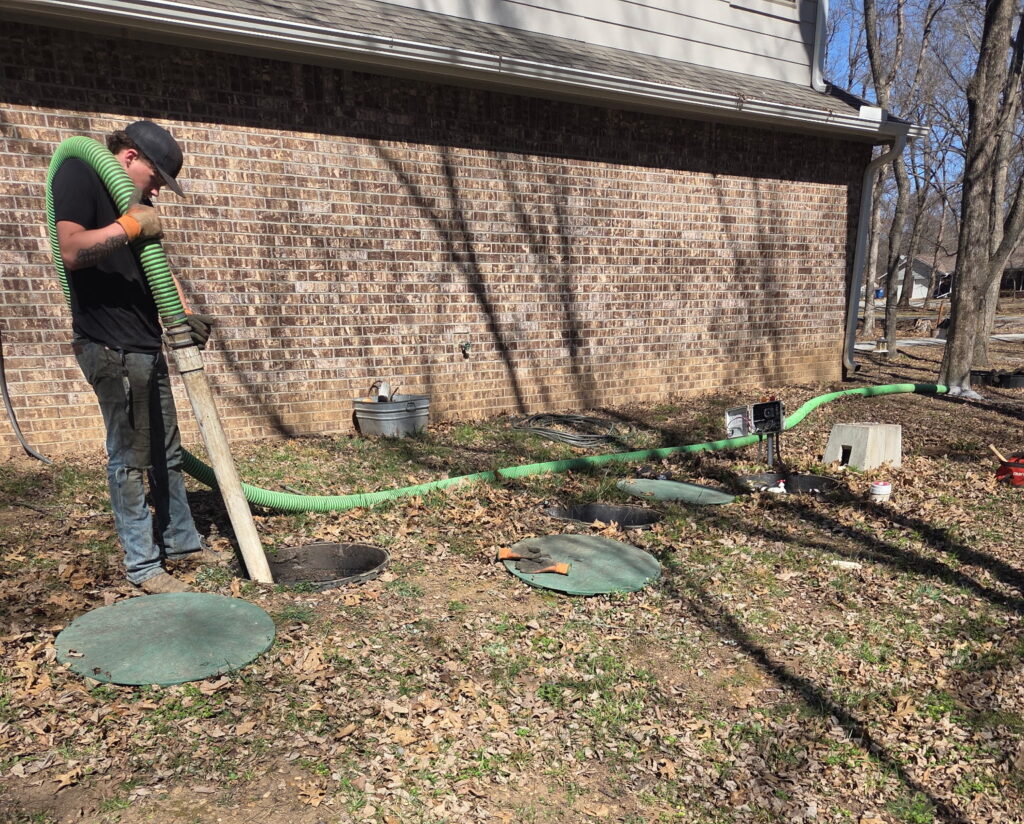
Soggy spots have multiple possible causes, and each cause has a different correct fix. Clogged lines, compacted soil, root intrusion, broken pipes, and failed tanks can all produce the same wet patch. Treating the wrong cause wastes money and lets the real problem grow. Professional diagnosis starts with the tank, checks the baffles and filters, and evaluates how the field accepts water. Technicians use locating equipment, probes, and experience to pinpoint the failure. That precision is something no additive bottle or online guess can provide.
DEQ certification matters here more than most homeowners realize. Oklahoma regulates septic work because bad repairs endanger groundwater and public health. Certified professionals know the state requirements for repairs, replacements, and system modifications. They pull the right permits, follow the right setbacks, and document the work correctly. Uncertified work can fail inspection and have to be redone at your expense. Certified service protects your investment and your property records.
Proper diagnosis also considers your whole system, not just the wet spot. A good technician evaluates household water use, tank size, system age, and soil conditions together. Aerobic and conventional systems fail in different ways and need different solutions. Sometimes the fix involves upgrading components; sometimes it means changing habits that overload the field. A complete picture leads to a fix that lasts instead of a patch that fails next summer. That is the standard professional service should always meet.
Why Choose Martin Septic for Drain Field Service
Martin Septic is DEQ certified for both aerobic and conventional septic systems, so every diagnosis and repair meets Oklahoma standards. Our crews are professionally trained, honest, and committed to full service septic solutions with no shortcuts. We serve Inola, Tulsa, Broken Arrow, Claremore, Owasso, Coweta, and communities across the region. As a Tulsa Home Builders Association member, we hold our work to a standard builders and homeowners both trust. When your yard shows soggy spots, we find the real cause and give you straight answers. That honesty is the foundation of everything we do.
Septic emergencies do not wait for business hours, and neither do we. Martin Septic offers emergency septic service day or night, because a backing up system cannot sit until Monday. Our team arrives with the equipment to pump, inspect, and stabilize your system fast. We handle everything from routine pumping to drain field repair to complete system installation. One company covers your entire septic system from tank to lateral lines. That range means you never get bounced between contractors while sewage rises.
Every job starts with a free, no obligation estimate, so you know the cost before any work begins. We explain what we find in plain language and let you decide how to proceed. No pressure, no surprise charges, and no shortcuts on the work itself. Your drain field is trying to tell you something; let us translate. Call Martin Septic today at (918) 640-2298 or email info@martinsepticok.com to schedule your inspection. One call now can save your drain field and thousands of dollars later.