
How to Winterize Your Septic System Before the First Freeze Hits
Cold weather does not break a septic system on its own. It exposes the parts that were already weak, already shallow, or already overdue for service. Northeast Oklahoma sees its first hard freeze somewhere between late October and mid November most years, and the systems that fail are almost always the ones nobody touched since spring. A slow leak, a compacted drain field, a tank that has not been pumped in six years; each of those turns into an emergency once the ground locks up. Frozen ground also makes repairs slower, dirtier, and more expensive, because equipment has to break through frost before any real work starts. The good news is that septic winterization is not complicated and it is not expensive. Most of it comes down to insulation, water habits, and clearing out problems while the ground is still soft. Homeowners who handle these steps in early fall almost never call for a frozen line in January. The ones who wait until the forecast shows a hard freeze are usually already too late. This guide walks through what to do, what freezes first, and when to bring in a professional.
What to Do to Winterize Your Septic System Before the First Freeze
Winterizing a septic system means protecting three things: the pipe running from the house to the tank, the tank itself, and the drain field that receives the treated effluent. Each one freezes for a different reason, so each one needs a different fix. Insulation handles the shallow components. Steady water use handles the internal temperature. Pumping and repair work handles everything that was already failing before the cold arrived. None of this requires digging up the yard or spending a weekend on your knees. It does require doing it before the ground freezes, because every one of these steps gets harder once frost sets in. Here is what actually works.
Insulating the Tank and Drain Field to Winterize Your Septic System
Insulation is the single most effective step in septic winterization, and it costs almost nothing. A layer of mulch, straw, or loose leaves spread 8 to 12 inches deep over the tank, the inlet line, and the drain field traps ground heat and keeps frost from driving down to the pipes. The layer needs to stay loose to work; packed material holds moisture and conducts cold instead of blocking it. Spread it wider than you think you need, covering the full footprint of the tank lids and at least the first section of lateral lines. Systems installed shallow are the ones that benefit most, and plenty of older Rogers County and Wagoner County installations sit closer to the surface than current standards allow. If your system was put in before the mid 1990s, assume it is shallow until someone confirms otherwise. Straw works better than mulch in open fields because it stays fluffy through rain. Fallen leaves work fine too, as long as you rake them into place rather than letting them mat down over winter.
Grass cover matters more than most homeowners realize. Let the grass over your drain field grow a little longer through the fall instead of cutting it short in October. That extra height holds air, traps snow, and acts as a natural insulating blanket over the laterals. Do not till, plow, or scrape the area, and do not add fill dirt thinking it will help; compacted soil pulls cold down faster and restricts the oxygen the field needs. Snow is your friend once it arrives, so keep vehicles, ATVs, and foot traffic off the drain field entirely. Compacted snow loses its insulating value and turns into an ice sheet that drives frost deeper. The same rule applies to the path between your driveway and the tank lids. Every tire track over that area is a cold channel straight down to the pipe.
Exposed components need direct attention. Risers, inspection ports, cleanouts, and any pipe sticking above grade should be checked for a tight seal and wrapped or covered before the first freeze. Insulated riser lids are available and worth the money on systems where the lids sit at ground level. Water lines feeding an aerobic chlorinator or a pump tank also need protection, since a single length of exposed PVC will split in one hard night. Check that your tank lids are not cracked, because cold air moving into the tank cools the liquid faster than anything happening above the soil. Divert downspouts and gutter runoff away from the drain field while you are out there. Saturated soil freezes far faster than damp soil, and roof runoff dumping onto laterals is one of the most common causes of a frozen field in this part of Oklahoma. Fifteen minutes with a downspout extension prevents a repair that runs into the thousands.
The Water Use Habits That Winterize Your Septic System From the Inside
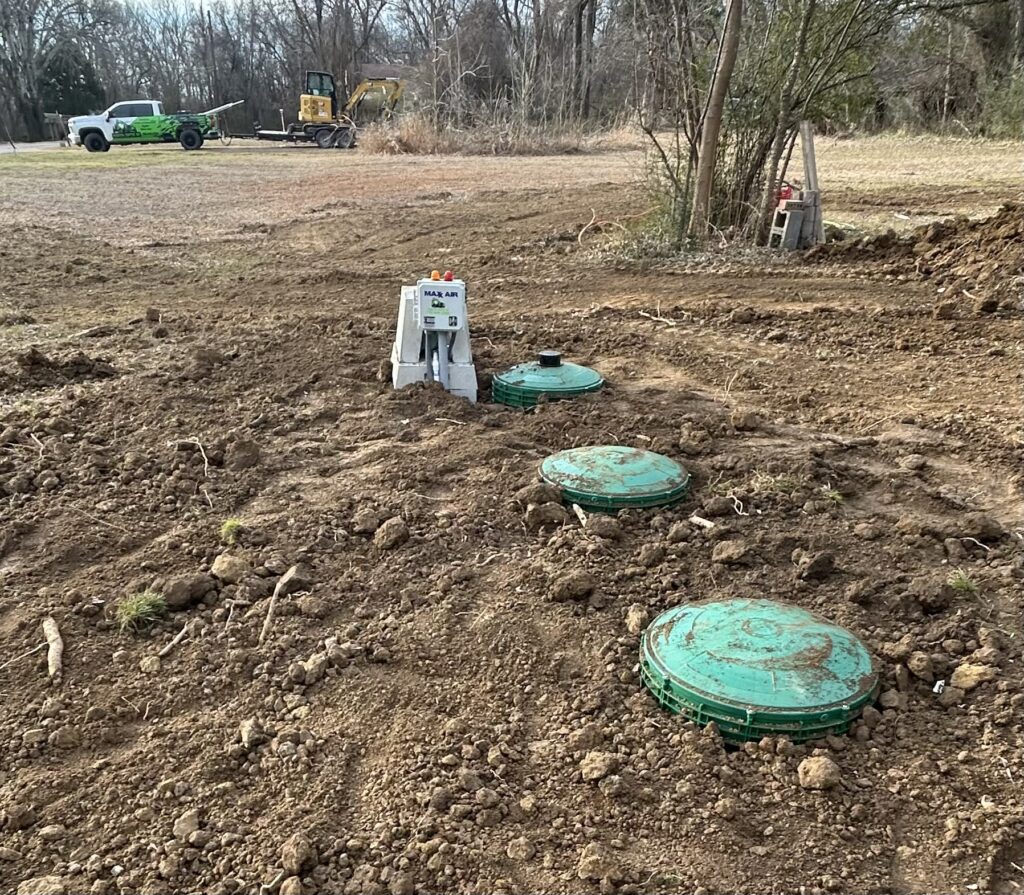
Warm wastewater is what keeps a septic system from freezing. Every shower, load of laundry, and sink of dishwater sends heat into the pipe and the tank, and that heat is the reason properly used systems almost never freeze. Households that keep normal daily water use through winter rarely see a problem. Households that leave for two weeks at Christmas come home to trouble. If you plan to be gone for an extended period, have someone run water at the house every few days or arrange for the system to be checked. Vacant rentals, hunting cabins, and seasonal properties around Fort Gibson and Oologah are the most frequent freeze calls we see. Low flow is worse than heavy flow when temperatures drop.
Spread your water use out instead of dumping it all at once. Running four loads of laundry back to back pushes a surge of water through the tank and out to the drain field faster than the soil can absorb it, and that standing effluent is what freezes in the laterals. Two loads on Monday and two on Thursday is better for the system than eight loads on Saturday. The same logic applies to long showers, back to back baths, and dishwasher cycles stacked together. Steady, moderate flow keeps the tank warm without overloading the field. This habit helps year round; in winter it prevents an actual freeze.
Fix every leak in the house before cold weather arrives. A dripping faucet or a running toilet sends a thin, constant trickle of cold water into the line, and thin trickles freeze while full flows do not. That slow drip also raises the water level in the tank and pushes more liquid into the drain field than it was designed to handle. Toilet flappers are the usual culprit and cost a few dollars to replace. Do not let faucets drip through cold nights the way you might with a city sewer connection; on a septic system that habit causes freezing rather than preventing it. Skip the antifreeze, rock salt, and chemical additives entirely, since none of them lower the freezing point inside a tank and all of them damage the bacteria doing the treatment work. Never pour hot grease down the drain hoping it will help either; it congeals in cold pipe and creates a blockage that has nothing to do with ice. Warm water in normal volumes is the only thing that belongs in the system.
Pumping and Repairs That Winterize Your Septic System Before Freezing Weather
Fall is the best time of year to pump a septic tank, and the reason is simple access. The ground is soft, the yard is dry, the truck can reach the lids without tearing up sod, and there is no ice to chip through. A tank sitting full of accumulated solids has less liquid capacity, which means effluent moves out to the drain field faster and with less retention time. That pushes partially treated water into laterals that are about to freeze. Most households need pumping every three to five years, though a family of six on a 1000 gallon tank may need it closer to every two. Aerobic systems and homes with garbage disposals run on shorter intervals. If you cannot remember the last time it was done, it is due. Need your tank pumped before winter? Click here for our septic pumping service.
Pumping is also the only time anyone gets a clear look inside the tank. A technician with the lids off can check baffle condition, inspect the effluent filter, measure sludge and scum depth, and spot cracks in the concrete that let groundwater in. Effluent filters clog gradually and then cause a backup with no warning, so cleaning one in October beats replacing a carpet in January. Inlet and outlet baffles deteriorate over time, especially in older tanks, and a failed outlet baffle sends solids straight into the drain field where they cause permanent damage. These findings only surface during service. Nobody notices a broken baffle from the surface of the yard.
Any repair on your list should be finished before the ground freezes. Soggy spots over the drain field, slow drains throughout the house, gurgling fixtures, and odors near the tank are all signals that something needs attention now rather than in the spring. Frozen ground turns a straightforward line repair into an excavation job, and emergency winter work always costs more than scheduled fall work. Alarm panels on aerobic systems should be tested, and a red light that has been ignored since summer needs to be addressed immediately. Pump floats, aerators, and control panels fail more often in cold weather because they work harder. Handle these while the weather is still cooperating and winter becomes uneventful.
Common Septic System Freeze Problems in Oklahoma Winters
Frost depth in northeast Oklahoma usually runs 6 to 12 inches, which sounds shallow until you consider how many components sit within that range. A long stretch of dry, windy, subfreezing days with no snow cover drives frost deeper than the numbers suggest, because snow is what normally slows the process. Certain parts of a septic system fail first and they fail in predictable order. Knowing which ones to watch tells you where to focus your effort. Here are the three that generate the most winter service calls in Rogers, Wagoner, and Mayes counties.
Frozen Septic Pipes and How These Septic System Freeze Problems Start
The pipe running from the house to the tank is the most common freeze point in any residential system. It is usually the shallowest section of the entire installation, it carries intermittent flow rather than constant flow, and it often sits under a driveway or a walkway where soil is compacted. Ice forms at the low points first, building in layers until the pipe closes off completely. The first symptom is a slow drain somewhere in the house, usually the fixture farthest from the tank. Within a day or two the toilets stop flushing properly and water backs up at floor level. Pipe slope matters here; a line laid with too little fall holds standing water between uses and that water freezes overnight. Lines installed with excessive fall have the opposite problem, letting liquid race out and leaving solids behind to accumulate. Correct slope is generally a quarter inch of drop per foot of run.
Never try to thaw a frozen septic line with an open flame, a torch, or boiling water poured down a drain. Heat applied to PVC deforms it, and a deformed line has to be dug up and replaced. Boiling water dumped into a frozen pipe often refreezes further down and makes the ice plug longer. Chemical drain openers do nothing to ice and damage the bacteria in the tank at the same time. Professional thawing uses steam equipment or a high pressure jetter with hot water, applied by someone who knows where the line runs and how deep it sits. That equipment clears the blockage without damaging the pipe. Guessing at the location and digging blindly in frozen ground usually costs more than the original repair would have.
Prevention beats thawing every time. If the same line freezes two winters in a row, the problem is depth, slope, or drainage rather than bad luck. Repeat freezing means the line needs to be relocated, reset at proper grade, or insulated with rigid board buried above the pipe. Rerouting a line away from a compacted driveway sometimes solves it permanently. Adding surface insulation over that specific run solves the rest. A system that freezes annually is telling you something about how it was installed, and no amount of careful water use will overcome an installation problem. Get it corrected in the fall and the issue does not return.
Aerobic Septic System Freeze Problems With Spray Heads and Pumps
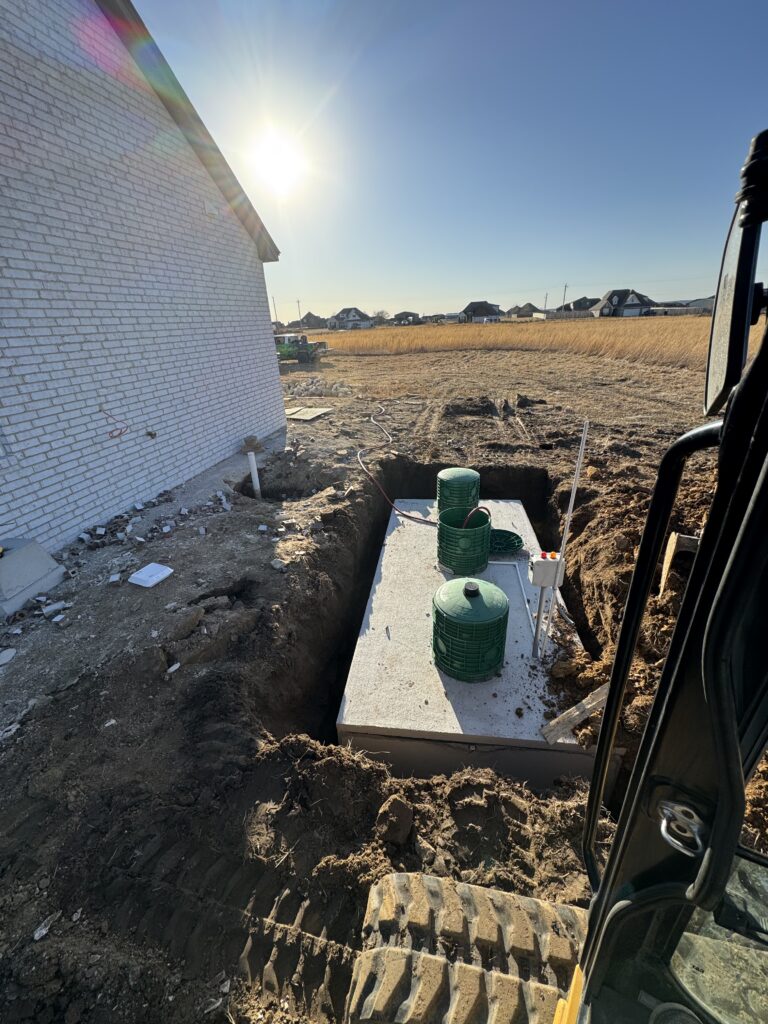
Aerobic treatment units are common throughout eastern Oklahoma because tight clay soils and small lots make conventional laterals impractical in many locations. They also have far more components exposed to cold than a conventional system does. Spray heads sit above ground by design, and the supply lines feeding them hold water between cycles. That standing water freezes first, then the head itself ices over and stops rotating, and eventually the line splits. Spray field lines should be checked in the fall for proper drainback, and heads should be inspected for wear. A head that is already sticking in summer will fail entirely in December. Oklahoma DEQ requires ongoing maintenance on aerobic systems for exactly these reasons.
The aerator is the heart of an aerobic system and it runs continuously. Cold weather is hard on the motor, the air filter, and the diffuser, and an aerator that quits in January means the treatment process stops while the household keeps producing wastewater. Effluent leaving an aerobic unit without aeration is not adequately treated, which creates odor problems and, on spray systems, a genuine health concern at the surface. Control panels and alarm boxes mounted outdoors take a beating from moisture and freezing temperatures, and corroded connections fail on the coldest night of the year. Check that your alarm sounds and lights when tested. Verify that the breaker feeding the system is on and labeled. Chlorinators need to stay stocked with the correct tablets, and pool chlorine is never an acceptable substitute in a wastewater chlorinator.
Pump tanks introduce their own cold weather problems. Float switches ice up when moisture collects on the tether, and a stuck float either runs the pump continuously or never triggers it at all. Both outcomes cause backups. The pump discharge line has to drain back after each cycle, and a line without proper drainback holds water that freezes solid. Timer settings on demand dose systems sometimes need adjustment for winter, spreading doses out to prevent surging cold effluent into a frozen field. A technician familiar with aerobic units can check all of this in a single visit. Homeowners rarely spot these issues on their own until the alarm goes off.
Drain Field Septic System Freeze Problems After a Hard Freeze
A frozen drain field is the most serious cold weather septic failure and the hardest to fix. Laterals freeze when effluent sits in the pipe instead of soaking into the surrounding gravel and soil, which usually means the field was already struggling before winter arrived. Compacted soil, a biomat layer that has grown too thick, hydraulic overload from a leaking fixture, and saturated ground from poor surface drainage all contribute. Once the laterals ice up, wastewater has nowhere to go and backs up into the tank and then into the house. There is no quick chemical fix and no way to safely apply heat across an entire field. Repair generally waits for a thaw, which can mean weeks of limited water use.
Warning signs appear well before the freeze. Standing water or unusually green, fast growing grass over the laterals in October means effluent is surfacing instead of absorbing. Soft, spongy ground in the field area points to the same problem. Slow drains that clear after a few hours suggest the field is accepting water but not fast enough. Odors outdoors near the field are another indicator. Any of these in the fall should be evaluated immediately, because a marginal drain field in November becomes a failed drain field in January. Seeing standing water over your laterals? Click here for our septic drain field service.
Protecting a healthy field through winter comes down to insulation, drainage, and load management. Keep the surface covered with grass or mulch, keep traffic off it, and keep roof runoff and driveway drainage pointed elsewhere. Reduce total household water use during extended cold snaps, spacing out laundry and dishwashing so the field never receives a large surge at once. Do not add water softener discharge to the system during winter if there is any way to route it elsewhere, since the extra volume of cold brine offers no benefit to the field. Repair any leaking fixture immediately rather than waiting for spring. A field that is not overloaded and stays covered will handle an Oklahoma winter without difficulty.
Why You Need Professional Septic Winterization Before the First Freeze
Homeowners can handle mulch, downspouts, and water habits on their own. The parts that require professional attention are the ones hidden below grade and inside the tank, and those are exactly the parts that cause winter failures. A fall service visit gives you a clear picture of tank condition, drain field performance, and component health before cold weather tests all three. It is the difference between planned maintenance in October and an emergency call at eleven at night in January. Scheduling ahead also means you get a normal appointment window instead of competing with every other frozen system in the county. Fall books up fast for a reason.
Professional Septic Winterization Catches Problems Early
Most septic failures develop over months and announce themselves quietly. Sludge builds a half inch at a time, a baffle corrodes gradually, a biomat thickens season by season, and none of it is visible from the yard. A trained technician measures those things directly and tells you where the system stands. That information turns guesswork into a plan, and it lets you schedule repairs on your own timeline instead of reacting to a backup. Catching a failing outlet baffle in October costs a fraction of replacing a drain field that solids destroyed over the winter. Early detection is the entire value of preventative service.
Inspections also establish a baseline you can use going forward. Knowing your tank size, your pumping interval, your drain field location, and your system type makes every future decision easier. It matters at resale, since Oklahoma buyers routinely request septic documentation and a recent inspection speeds closing considerably. It matters for insurance claims and for permits on additions or remodels. Homeowners who inherit a system with no records benefit the most from a thorough first inspection. Documentation protects the property as much as the system.
Timing gives you options that winter takes away. A repair identified in early fall can be scheduled, priced, and completed on soft ground with dry weather. The same repair discovered in January means frozen soil, a torn up yard, and emergency rates. Parts availability is better outside of peak season too. Homeowners who service their systems every fall almost never make a winter emergency call. That is not luck; it is the result of finding problems while they were still small.

What Professional Septic Winterization Service Includes
A complete fall service starts with locating and opening the tank, then measuring sludge and scum layers to determine pumping need. The technician inspects the inlet and outlet baffles, checks the effluent filter and cleans or replaces it, and looks for cracks, root intrusion, and groundwater infiltration in the tank walls. Lids and risers get checked for a proper seal, since a loose lid lets cold air and surface water into the tank. On aerobic systems, the aerator, control panel, alarm, chlorinator, pump, and float switches are all tested under load. Spray heads and supply lines are inspected for drainback and wear. Every one of those items is a documented winter failure point.
The drain field portion of the visit covers surface condition, absorption performance, and drainage around the field. A technician walks the laterals looking for saturation, settling, surfacing effluent, and vegetation patterns that indicate trouble. Distribution boxes get opened and checked for level flow to each lateral, because an unlevel box overloads one line while starving the others. Surface drainage from gutters, driveways, and neighboring slopes gets evaluated. Recommendations for insulation and traffic control come out of what the field actually looks like rather than a generic checklist. Small corrections at this stage prevent large failures later.
Repairs identified during the visit can be handled before the ground freezes. Cracked lids, failed baffles, damaged risers, split lines, worn pumps, and clogged filters all get addressed while access is easy. Systems needing more substantial work get a clear scope and a real estimate rather than a vague warning. Homeowners leave the appointment knowing exactly what their system needs and when. Have a repair that needs to happen before winter? Click here for our septic repair service.
Why Choose Martin Septic for Professional Septic Winterization
Martin Septic is DEQ certified for both aerobic and conventional septic systems, which means one company handles the entire property regardless of what is in the ground. We work throughout Rogers, Wagoner, Mayes, and Tulsa counties from our shop in Inola, serving Claremore, Catoosa, Coweta, Owasso, Pryor Creek, Verdigris, Broken Arrow, Bixby, Jenks, Collinsville, Wagoner, and Tulsa. Our crews are professionally trained and honest about what a system needs, which sometimes means telling a homeowner the tank does not need pumping yet. We are members of the Tulsa Home Builders Association and we hold ourselves to the standards that come with it. Estimates are free, with no obligation and no pressure.
Our service covers the full range of septic work: pumping, repair, drain field service, installation, design and engineering, and water line installation. That means a fall inspection does not end with a referral to another company. Emergency service is available day or night, because septic problems do not respect business hours and a backup on a Saturday night in December cannot wait until Monday. We answer the phone and we show up. No shortcuts, no upselling, no surprises on the invoice.
The best time to winterize a septic system is before the first freeze, not after the first backup. Fall appointments fill quickly across our service area, so getting on the schedule early makes a real difference. Call Martin Septic at (918) 640-2298 or email info@martinsepticok.com to schedule your fall inspection, pumping, or repair. We will tell you exactly what your system needs to make it through the winter and what it does not need. One visit now saves a very cold, very expensive phone call later.