Gurgling Drains in August? The Warning Sign Most Homeowners Ignore
Gurgling drains in the middle of August are easy to brush off, but that strange sound is one of the earliest warnings your septic system can give you. That bubbling noise happens when air gets trapped in your plumbing lines because wastewater is not flowing the way it should. In Oklahoma, August brings heavy water use from extra laundry, more showers, summer guests, and constant activity around the house. All of that added wastewater puts real strain on a septic tank that may already be close to full. Hot, dry weather can also harden the soil around your drain field, which slows absorption and pushes problems back toward the house. Many homeowners wait until sewage backs up into a tub or toilet before they call for help, and by then the repair bill is much higher. Catching the problem at the gurgling stage can save you thousands of dollars and a miserable cleanup. This guide explains what those sounds mean, what to do about them, and when to bring in a professional septic company.
What Gurgling Drains Mean for Your Septic System in Summer
Gurgling drains are not a plumbing quirk; they are a symptom of restricted flow or trapped air somewhere between your fixtures and your septic system. When wastewater cannot move freely through the pipes, air bubbles get forced back up through the water in your drain traps, and that creates the gurgle you hear. In summer, the most common culprits are a septic tank that has reached capacity, a drain field that is struggling to absorb water, or a blockage in the pipes or vents. Each of these problems gets worse under heavy August water use. The sound often starts at the lowest drains in the house, such as a basement shower or a first floor tub. If more than one drain gurgles at the same time, the problem is almost certainly in the septic system rather than a single clogged pipe. Understanding the cause is the first step toward fixing it before sewage ends up on your floor.
Gurgling Drains and a Full Septic Tank
A septic tank that has not been pumped in several years is the most common reason for gurgling drains in August. Every tank collects solid waste over time, and that sludge layer slowly reduces the amount of space available for incoming wastewater. When the tank gets too full, water backs up into the main sewer line instead of flowing through smoothly. Air trapped in that line escapes through your household drains, and you hear it as a gurgle every time you flush or run the washing machine. Summer makes this worse because families use far more water in August than in cooler months. Kids are home, guests visit, and laundry loads pile up day after day. A tank that could keep up in February may fall behind in August. If your tank has not been pumped in three to five years and your drains are gurgling, pumping should be your first move.
The sludge layer inside a full tank does more than take up space; it can also clog the outlet baffle and push solids into the drain field. Once solids leave the tank, they settle in the drain field pipes and soil, causing damage that pumping alone cannot fix. That is why gurgling drains deserve fast attention instead of a wait and see approach. A pumping appointment costs a fraction of what drain field repair costs. During pumping, a trained technician can also inspect the baffles, check sludge levels, and tell you exactly how your tank is holding up. This inspection often catches cracked lids, damaged inlet pipes, and other small problems before they grow. Homeowners who pump on a regular schedule almost never deal with sudden sewage backups. Regular pumping is the cheapest insurance a septic owner can buy.
Timing matters when your tank is full and your drains are talking to you. Waiting even a few weeks in August can turn a routine pump into an emergency call on a Saturday night. Sewage backups do not follow a convenient schedule, and they usually strike when the house is busiest. A backup can ruin flooring, drywall, and personal belongings, and the cleanup often requires professional remediation. Insurance does not always cover septic backups, so the cost lands on the homeowner. Compare that risk to a simple scheduled pumping visit and the choice is clear. Is your tank overdue and your drains gurgling? Click here for our septic pumping service and get on the schedule before the problem grows.
Gurgling Drains Caused by Drain Field Problems
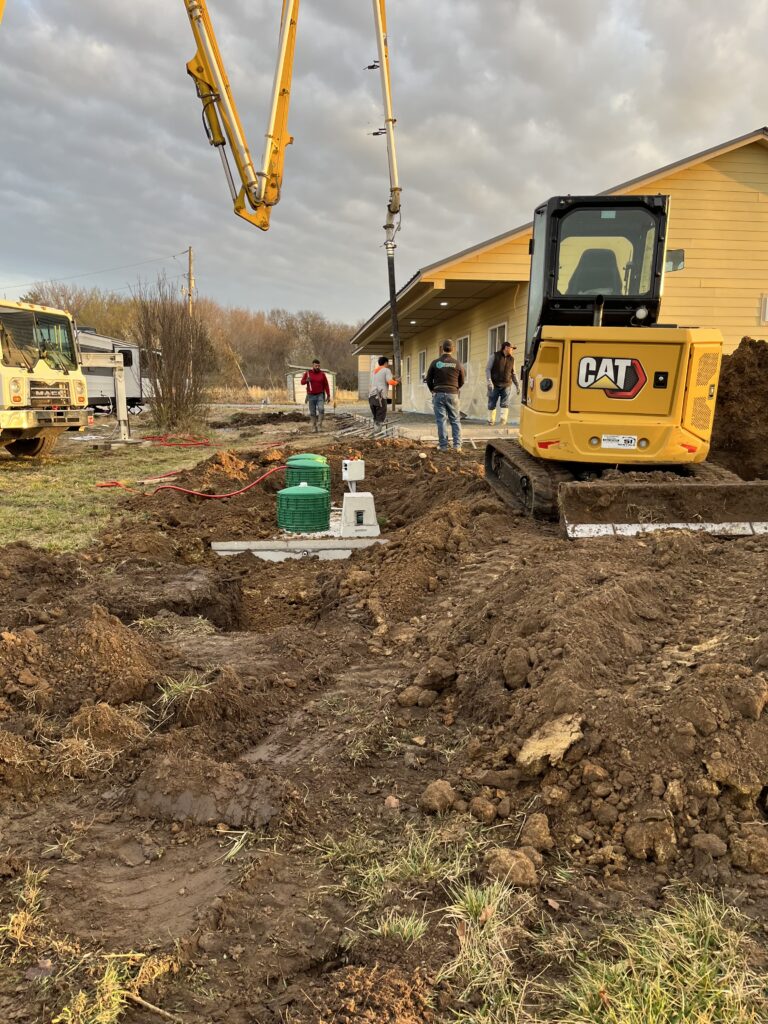
Your drain field is the part of the septic system that absorbs treated wastewater into the soil, and when it struggles, gurgling drains are often the first clue. August heat in Oklahoma bakes the ground hard, and compacted or saturated soil cannot accept water at the normal rate. When the drain field slows down, wastewater has nowhere to go, so it sits in the tank and the pipes longer than it should. That standing water traps air, and the air forces its way back through your drains with a bubbling sound. You may also notice soggy patches or unusually green grass over the drain field lines. A sewage odor in the yard is another strong sign the field is failing to absorb properly. These symptoms together point to a drain field problem rather than a simple clog. Ignoring them allows the field to deteriorate further with every gallon you send its way.
Several things damage drain fields during the summer months. Vehicles parked or driven over the field compact the soil and crush the buried pipes. Tree and shrub roots seek out moisture during dry spells and invade the perforated lines. Excess solids from an overdue tank coat the soil and create a layer called biomat that blocks absorption. Heavy irrigation near the field can also saturate the soil so that it cannot handle household wastewater on top of sprinkler runoff. Each of these problems produces the same early symptom inside the house: drains that gurgle and empty slowly. The difference between a minor fix and a full field replacement often comes down to how quickly the homeowner responds. Fields caught early can sometimes be rested, treated, or partially repaired.
A failing drain field is the most expensive septic problem a homeowner can face, which is exactly why the gurgling warning matters so much. Full drain field replacement can cost many times more than a repair or a pumping visit. Professional diagnosis is essential because drain field symptoms overlap with tank and pipe problems. A septic technician can locate the field, check the distribution box, and test how well the soil is accepting water. From there, you get real options instead of guesswork. Some fields need jetting, some need root removal, and some need new laterals in a fresh section of soil. Acting at the first gurgle keeps more of those affordable options on the table. Think your yard is showing signs of trouble? Click here for our septic drain field service and get an honest assessment.
Gurgling Drains From Blocked Septic Vents and Pipes
Not every gurgle means a full tank or a failed field; sometimes the problem is a blockage in the pipes or the plumbing vent system. Your home’s plumbing relies on vent pipes that run through the roof to let air in and out of the drain lines. When a vent gets blocked by a bird nest, leaves, or debris, air cannot escape properly, and it bubbles back through the drains instead. Partial clogs in the main sewer line create the same effect by restricting flow and trapping air pockets. Grease buildup is a frequent summer offender because cookouts and heavy kitchen use send fats down the drain. Those fats cool and harden inside the pipe, narrowing it a little more each week. Tree roots also invade sewer lines through small cracks and joints, especially during dry August weather when roots hunt for water. Any of these blockages will announce itself with gurgling long before a full backup.
Diagnosing a pipe or vent blockage takes more than a plunger and a bottle of drain cleaner. Chemical drain cleaners are actually harmful to septic systems because they kill the bacteria your tank needs to break down waste. Pouring them down a gurgling drain can turn a small problem into a dead tank. A professional can run a camera through the line to find the exact location and cause of the blockage. Cameras reveal root intrusion, pipe sags, cracks, and grease dams with precision. That information means the repair targets the real problem instead of treating symptoms. Homeowners who skip diagnosis often pay twice: once for the guess and again for the real fix. Accurate diagnosis is always the cheaper path.
The location of the blockage determines the fix, and a trained septic crew can handle all of them. Vent blockages get cleared from the roof. Main line clogs get jetted or cabled out. Root intrusion may require cutting the roots and repairing or replacing the damaged pipe section. Collapsed or badly sagging pipes need excavation and replacement to restore proper slope. Each repair restores smooth flow, and the gurgling stops once air can move normally through the system again. Fast action here protects your tank and drain field from the strain of constant backflow. A blocked pipe left alone all August will eventually stop your whole system.
How to Respond to Gurgling Drains Before Septic Backup Happens
Hearing gurgling drains gives you a window of time, and what you do with that window determines how this story ends. Some responses help immediately, some buy you time, and some make everything worse. The right sequence is simple: reduce strain on the system, avoid harmful shortcuts, and get professional eyes on the problem quickly. August is a bad month to gamble with a septic system because usage stays high and the weather punishes weak drain fields. A backup during a family gathering or a holiday weekend is a nightmare that no homeowner wants. The steps below walk through exactly how to respond. Follow them in order and you give your system the best chance of a quick, affordable recovery.
Schedule Septic Pumping When Gurgling Drains Start
The single most effective response to gurgling drains is scheduling a septic pumping appointment right away. Pumping removes the accumulated sludge and scum that restrict flow inside the tank. Once the tank has room again, wastewater moves freely, air stops getting trapped, and the gurgling usually fades. Pumping also gives a technician the chance to look inside the tank and evaluate its condition firsthand. Sludge depth, baffle condition, water levels, and signs of backflow from the drain field all become visible during a pump out. That inspection tells you if pumping alone solved the problem or if something bigger is going on. No other single service delivers this much diagnostic value for the price. This is why pumping should always come first when gurgling begins.
Most septic tanks need pumping every three to five years, but the right interval depends on household size and tank capacity. A family of five fills a tank much faster than a retired couple. Garbage disposals add solids quickly and shorten the interval further. If you cannot remember the last time your tank was pumped, it is overdue by definition. Keep records of every pumping visit so you can track your household’s actual schedule. Many homeowners set a reminder as soon as the truck leaves so the next appointment never slips. A consistent pumping routine prevents most gurgling episodes from ever starting. Prevention is always cheaper than reaction in the septic world.
August is actually a smart time to pump in Oklahoma because the ground is dry and access is easy. Trucks can reach tanks without tearing up a wet lawn, and lids are simple to locate and uncover. Waiting until fall or winter rains arrive makes the job messier and sometimes harder to schedule. Pumping before the school year starts also resets your system before routines shift and holiday hosting season approaches. A freshly pumped tank enters the wet season with maximum capacity. That capacity is your buffer against the heavy rains that saturate drain fields later in the year. Smart homeowners use late summer as their annual septic checkpoint. Your gurgling drains are simply moving that checkpoint up on the calendar.
Reduce Water Use to Ease Gurgling Drains
While you wait for your service appointment, cutting water use takes immediate pressure off the system and can ease gurgling drains within hours. Every gallon you keep out of the tank is a gallon the struggling system does not have to process. Spread laundry loads across the week instead of running four loads in one afternoon. Shorten showers and skip baths until the system is serviced. Run the dishwasher only when it is completely full. Fix any running toilets immediately, because a single running toilet can send hundreds of extra gallons into your tank every day. Turn off irrigation zones near the drain field so the soil there can dry out and absorb household wastewater. These small changes add up fast and can keep a stressed system limping along safely until help arrives.
Watch what goes down the drains just as carefully as how much water goes down them. Grease, coffee grounds, and food scraps belong in the trash, not the disposal. Wipes, feminine products, paper towels, and anything labeled flushable should never enter a septic system. These items do not break down and they pile up in the tank, worsening the exact conditions that cause gurgling. Harsh chemicals like bleach in large amounts, drain cleaners, and solvents kill the beneficial bacteria that digest waste inside the tank. A tank with dead bacteria fills with solids far faster than a healthy one. Treat your drains like a direct line to a living system, because that is exactly what they are. Good habits formed during a gurgling scare tend to protect the system for years afterward.
Pay attention to how the system responds as you reduce usage, because the response itself is diagnostic information. If gurgling fades significantly when water use drops, the system is overloaded but probably still functional, and pumping will likely resolve it. If gurgling continues even with minimal water use, the blockage or failure is more serious and needs urgent professional attention. Note which drains gurgle, when the sounds happen, and what activities trigger them. Share those details with your septic technician when they arrive. Specific observations help the crew diagnose faster and more accurately. Faster diagnosis means a faster fix and a smaller bill. You are the eyes and ears of your septic system, so use that position well.
Call for Septic Repair When Gurgling Drains Get Worse
Some warning signs mean the time for waiting is over and professional septic repair is needed immediately. Sewage odors inside the house signal that wastewater is backing up close to your fixtures. Water rising in a shower or tub when the washing machine drains means the main line is nearly blocked. Wet, smelly ground over the tank or drain field shows that sewage is surfacing in the yard. Multiple drains gurgling at once, especially with slow flushing toilets, points to a system level failure rather than a single clog. Any of these symptoms on top of gurgling drains means the system is days or hours from a full backup. At that point, do not wait for a routine appointment slot. Call a septic company that offers emergency service and explain exactly what you are seeing.
Professional repair addresses the actual failure point, which do it yourself methods almost never reach. A septic crew can excavate and repair broken inlet or outlet pipes, replace damaged baffles, and fix crushed sewer lines between the house and the tank. They can clear root intrusion with the right cutting equipment and then repair the pipe so roots do not return. Distribution box problems, tank cracks, and failed pumps in aerobic systems all fall within a trained crew’s capabilities. Every one of these repairs stops the gurgling at its source. Homeowners who attempt these fixes without training risk injury, code violations, and worse damage. Septic tanks also produce dangerous gases, and entering or leaning into a tank can be fatal. Leave open tank work to certified professionals every single time.
The cost math on early repair is heavily in your favor. Replacing a section of damaged pipe or a broken baffle costs a small fraction of replacing a drain field ruined by months of backflow. Early repair also spares you the property damage, health hazards, and stress of raw sewage inside your home. Oklahoma DEQ rules govern septic repairs, so hiring a certified company keeps your system legal and protects your property value. Certified crews pull the right approvals and document the work properly. That paper trail matters when you sell your home. Hearing worsening gurgles or seeing backup warning signs? Click here for our septic repair service and get a trained crew out fast.
Why You Need Professional Septic Service for Gurgling Drains
Gurgling drains have several possible causes, and guessing wrong wastes money while the real problem grows. A professional septic company brings the tools, training, and experience to identify the true cause on the first visit. Cameras, probes, and locating equipment reveal what no homeowner can see from the surface. Certified technicians also know Oklahoma DEQ requirements, so every fix meets code and protects your property. August is peak strain season for septic systems, which makes fast, accurate service even more valuable. The sections below explain what professional service delivers and why Martin Septic is the right call in northeast Oklahoma.
Professional Septic Inspections Find the Cause of Gurgling Drains
A professional inspection turns a mystery sound into a clear diagnosis. Technicians check tank levels, measure sludge depth, examine baffles, and evaluate how the drain field is accepting water. Camera equipment travels through sewer lines to spot roots, cracks, sags, and grease blockages exactly where they hide. This process pinpoints the cause of gurgling drains instead of guessing at it. You get a straight answer about what is wrong and what it will take to fix. That clarity protects you from paying for repairs you do not need.
Inspections also catch secondary problems before they become their own emergencies. A crew diagnosing gurgling drains might also find a deteriorating lid, a leaking riser, or early biomat formation in the field. Each early catch is money saved down the road. Written inspection findings give you a record of your system’s condition over time. That record helps you plan maintenance instead of reacting to failures. Homeowners with inspection histories make smarter, cheaper decisions about their septic systems.
Buying or selling a home with a septic system makes inspections even more important. Gurgling drains discovered during a sale can derail a closing if nobody knows the cause. A professional inspection settles the question with evidence instead of speculation. Sellers can fix issues before listing, and buyers can negotiate with facts in hand. Lenders and insurers often want documentation of septic condition as well. An inspection is a small investment that protects one of your largest assets.
Fast Septic Service Stops Gurgling Drains From Becoming Backups
Speed matters when a septic system starts warning you. Gurgling drains can progress to slow drains, then to sewage backup, sometimes within days during heavy August use. A company that answers the phone and shows up quickly can catch the problem in the affordable stage. Emergency availability means a Saturday night backup does not have to wait until Monday. Every hour of delay during a failure pushes more wastewater into a struggling tank and field. Fast response directly limits the damage and the final cost.
Fast service only helps if the crew arrives ready to fix what they find. A truck equipped for pumping, jetting, camera inspection, and repair can resolve most gurgling causes in a single visit. One visit solutions save you from days of restricted water use while waiting for a second appointment. They also save the repeat trip charges that pad bills from less prepared companies. Experienced crews recognize patterns quickly because they have seen the same failures across thousands of local systems. That local experience translates directly into faster fixes for you.
Local response also means local knowledge of soil, weather, and system types. Northeast Oklahoma clay soils, dry August ground, and common regional installation styles all affect how systems fail and how they get fixed. A local crew factors those conditions into every diagnosis. National call centers and out of area contractors simply cannot match that. When your drains gurgle in Inola, Claremore, Owasso, or Broken Arrow, the fastest competent help is the local one. Choose a company that lives where you live.
Why Choose Martin Septic for Gurgling Drains
Martin Septic is DEQ certified for both aerobic and conventional septic systems, so our crews can diagnose and fix gurgling drains on any system type. We provide full service septic solutions with no shortcuts, from pumping and inspections to complete repairs and drain field work. Our professionally trained, honest crews explain what they find in plain language and give you real options. We are members of the Tulsa Home Builders Association and take our reputation in this community seriously. Every job gets done right because that is the only way we work. Homeowners across northeast Oklahoma trust us for exactly that reason.
We also know septic problems do not wait for business hours, which is why we offer emergency septic service day or night. A backup at midnight gets the same professional response as a scheduled Tuesday appointment. Our service area covers Tulsa, Broken Arrow, Owasso, Claremore, Bixby, Jenks, Coweta, Catoosa, Collinsville, Verdigris, Wagoner, Pryor Creek, and the surrounding communities. Wherever you are in our area, help is close. Fast local response protects your home when minutes matter. That peace of mind is part of what you get with every call.
Every estimate from Martin Septic is free with no obligation, every time. You will know the cost and the plan before any work begins, with no pressure and no surprises. If your drains are gurgling this August, do not wait for the backup to make the decision for you. Call Martin Septic at (918) 640-2298 or email info@martinsepticok.com to schedule your service today. We are located at 29184 S 4170 Rd, Inola, OK 74036, and we are ready to help. Let us quiet those drains before summer strain turns into a summer disaster.