Slow Flushing Toilets? How to Tell if It’s a Clog or Your Septic Tank
A slow flushing toilet is one of the most common complaints homeowners deal with, and summer is when the problem tends to show up most. Hot Oklahoma weather brings houseguests, family cookouts, and kids home from school, which means your plumbing and septic system work harder than any other time of year. When a toilet flushes weakly or drains slowly, the cause is usually one of two things: a simple clog in the toilet or drain line, or a septic tank that is full, failing, or backed up. Knowing the difference matters because the fixes are completely different. A clog can often be cleared in minutes with a plunger, while a septic problem left alone can turn into sewage in your yard or your bathtub. The good news is that your home gives you clear clues if you know where to look. This guide walks you through how to diagnose a slow flushing toilet, what signs point to the septic tank, and when it is time to call a professional. If you suspect your tank is the issue, do not wait; small septic problems become expensive septic problems fast.
Signs Your Slow Flushing Toilet Is Just a Clog
Most slow flushing toilets are caused by a localized clog, not a septic emergency. Clogs happen when toilet paper, wipes, hygiene products, or foreign objects get stuck in the toilet trap or the branch drain line serving that bathroom. The key word here is localized. A clog affects one fixture or one bathroom, while a septic problem affects the whole house. Before you panic about your tank, run through a few simple checks that can confirm the problem is limited to a single toilet. Test other drains, listen for gurgling, and pay attention to how the toilet responds to a plunger. These quick tests take five minutes and can save you from an unnecessary service call, or tell you that you need one right away.
One Slow Flushing Toilet Usually Means a Simple Clog
The first thing to check when you have a slow flushing toilet is how many fixtures are affected. Go around the house and flush every toilet, run every sink, and fill and drain a bathtub. If only one toilet flushes slowly while everything else drains normally, the problem is almost certainly a clog in that toilet or its branch line. Toilet traps have a curved design that catches excess paper, wipes, toys, and other objects before they travel deeper into your plumbing. Kids are famous for flushing things they should not, and even adults flush wipes labeled as flushable that never break down. A partial clog lets some water through, which is exactly why the flush looks weak instead of overflowing. This kind of blockage has nothing to do with your septic tank and can usually be solved at the fixture itself.
Start with a quality flange plunger, which seals the toilet outlet better than a flat sink plunger. Give it fifteen to twenty firm pushes, keeping the seal tight, then test the flush. If plunging does not work, a toilet auger can reach clogs sitting past the trap where a plunger has no effect. Avoid chemical drain cleaners in a home with a septic system because they kill the bacteria your tank needs to break down waste. Harsh chemicals can also damage older pipes and create hazards if you later need to plunge or snake the line. Mechanical clearing is always the safer choice for septic homes. If the clog clears and the toilet flushes strong again, you have your answer.
There is one more test worth doing before you close the case. Flush the toilet several times over the next day and watch for the slow flush to return. A clog that keeps coming back in the same toilet may point to a partial blockage deeper in the branch line, a buildup of mineral deposits in an older toilet, or a venting issue. Repeated clogs in one bathroom can also mean roots or a bellied pipe in that section of drain. If you clear the toilet and it stays fixed, great. If it slows down again within days, the blockage is likely beyond what household tools can reach. That is the point where a professional inspection makes sense, because guessing gets expensive when pipes are involved.
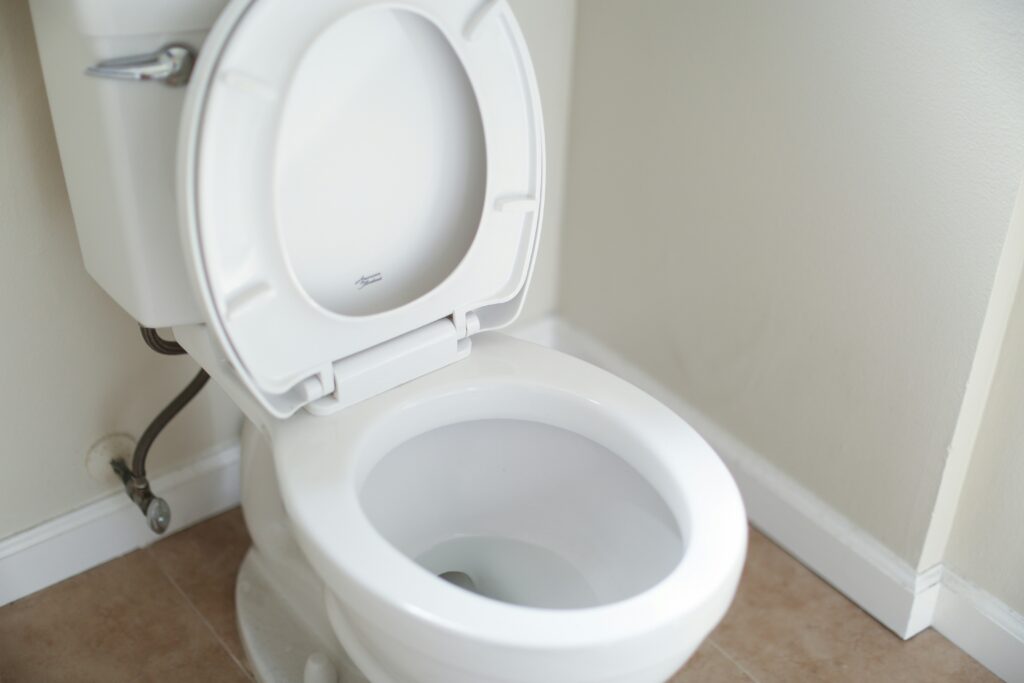
A Slow Flushing Toilet With Normal Drains Elsewhere Points Away From the Septic Tank
Your septic tank serves every drain in the house, which is the single most useful diagnostic fact you have. Every toilet, sink, shower, washing machine, and dishwasher sends wastewater to the same tank through the main sewer line. If the tank were full or failing, it could not selectively slow down one toilet while letting the kitchen sink drain perfectly. So when your slow flushing toilet is the only symptom, the septic tank is very unlikely to be the cause. This is why checking multiple fixtures is step one in any diagnosis. Run water in the sinks closest to the problem toilet and in rooms on the other side of the house. Compare how fast they drain and listen carefully as the water goes down. Normal, quiet drainage everywhere else means your tank is doing its job.
Pay special attention to the lowest drains in your home during this test. Basement bathrooms, floor drains, and ground floor showers are the first places septic trouble appears because wastewater backs up to the lowest exit point first. If those low drains are clear and odor free, that is strong evidence your tank has capacity. Also check the area around your septic tank and drain field outside. Firm, dry ground with no sewage smell supports the clog diagnosis. Standing water or soggy grass over the drain field tells a different story, even if only one toilet is acting up. Outdoor symptoms always deserve attention no matter what your indoor plumbing is doing. A quick walk around the yard completes the picture.
Keep in mind that clogs and septic problems are not mutually exclusive. A house with a nearly full septic tank can also have a clogged toilet at the same time, and clearing the clog may mask the bigger issue for a while. If your tank has not been pumped in three years or more, a slow flushing toilet is a good reminder to get on the schedule regardless of what the plunger accomplishes. Routine pumping removes accumulated solids before they cause backups, protects your drain field, and gives a trained technician a chance to spot problems early. Prevention is always cheaper than repair in the septic world. Due for service? Click here for our septic pumping service and get your tank checked before summer guests put it to the test.
Gurgling and Slow Flushing Toilets Can Signal a Drain Line Clog
Gurgling sounds are an important clue when diagnosing a slow flushing toilet. That bubbling noise happens when air gets trapped in the drain line and forces its way back through the water in the toilet trap. Air should normally escape through your plumbing vent, a pipe that runs up through the roof. When a clog blocks the drain or debris blocks the vent, air has nowhere to go and pushes back into your fixtures. A toilet that gurgles when you run the nearby sink or shower is telling you the blockage sits in the shared branch line, not the toilet itself. This is still a clog, but it is one that lives deeper in the system. Plungers rarely fix it, and augers only reach it sometimes. The location of the gurgle helps a professional pinpoint the blockage quickly.
Vent blockages are more common than most homeowners realize, especially in spring and summer. Birds build nests in vent pipes, leaves and debris wash in during storms, and wasps sometimes seal openings with their nests. A blocked vent creates suction in the drain lines that slows every flush and can even siphon water out of traps, letting sewer gas into the house. If you smell sewage indoors but your drains are technically working, the vent deserves a look. Clearing a vent usually requires roof access and the right tools, so this is a job most homeowners should leave to a professional. It is a relatively inexpensive fix compared to what people fear when they smell sewage. Never assume the worst until the simple causes are ruled out.
The most serious clog scenario is a blockage in the main sewer line between your house and the septic tank. Tree roots love the moisture around sewer pipes and will invade through the smallest crack or loose joint, growing into a mat that catches everything you flush. Grease, wipes, and paper build up on the roots until the line closes off. A main line clog produces gurgling in multiple fixtures and slow drainage that gets worse by the day. In Oklahoma, summer root growth is aggressive, and drought conditions push roots even harder toward the water in your pipes. A camera inspection can locate the blockage precisely and show what caused it. Catching a root intrusion early means a cleaning; catching it late can mean digging up and replacing pipe.
Signs Your Slow Flushing Toilet Means Septic Tank Trouble
When more than one fixture slows down, your attention should shift from the toilet to the septic tank. A septic system fails gradually in most cases, and slow flushing toilets across the house are one of the earliest warnings. The tank fills with solids over time, the drain field loses its ability to absorb water, or the outlet baffle clogs, and wastewater starts moving slower everywhere. Summer accelerates all of this because water use spikes with extra laundry, extra showers, and extra guests. Homeowners who know the warning signs can act before sewage backs up into the house. The signs below are the ones that separate a septic problem from a simple clog. If you recognize two or more of them, stop plunging and start making a phone call.
Multiple Slow Drains Point to a Full Septic Tank
The clearest sign that your slow flushing toilet is a septic tank problem is company. When every toilet in the house flushes weakly, the shower drains slowly, and the kitchen sink takes forever to empty, one shared cause is at work. All of those fixtures meet at the main sewer line and flow into the same tank. A tank that is full of solids has no room to accept incoming wastewater at normal speed, so everything upstream slows down together. This is fundamentally different from a single clogged toilet, and no amount of plunging will fix it. Homeowners sometimes spend a whole weekend fighting individual drains when the real problem sits buried in the yard. Widespread slowness is your cue to think bigger. The system is telling you it has reached capacity.
Septic tanks fill on a predictable schedule based on tank size, household size, and water habits. Most tanks need pumping every three to five years, though a large family in a home with a smaller tank may need it more often. Solids called sludge settle on the bottom of the tank while grease and scum float on top, and both layers grow every single day. When sludge rises high enough to reach the outlet, it starts flowing into the drain field where it clogs the soil. That is how a skipped pumping turns into a drain field replacement costing thousands of dollars. If you cannot remember your last pumping, your tank is overdue by definition. Records matter, and so does a regular schedule.
Watch for the pattern of symptoms as well as the symptoms themselves. Septic slowdowns typically get worse over days and weeks, while clogs tend to appear suddenly. Drains that were fine last month, sluggish last week, and barely moving today describe a filling tank almost perfectly. Heavy water use makes the pattern obvious; laundry day or a house full of weekend guests will push a struggling system over the edge. Some homeowners notice drains improve slightly after the house sits empty for a day, which happens because the tank got a chance to catch up. That temporary improvement fools people into waiting, and waiting is the worst move. A tank at capacity has exactly one direction left to send sewage, and that direction is back into your home.

Sewage Odors and Slow Flushing Toilets Are Septic Tank Red Flags
Your nose is one of the best septic diagnostic tools you own. A properly working septic system is essentially odorless from inside the house and from the yard. When you start smelling sewage near drains, in the bathroom, or outside near the tank and drain field, wastewater is not going where it should. Indoors, odors often come from gases pushed back through the plumbing by a full or backed up tank. Outdoors, odors mean effluent is surfacing instead of soaking into the soil. Pair a sewage smell with a slow flushing toilet and the septic system moves to the top of the suspect list. Summer heat makes these odors stronger and easier to detect, which is one small advantage of a July problem. Do not ignore what you smell just because the drains still technically work.
Take a walk around your yard and inspect the ground over your septic tank and drain field. Healthy drain fields look like the rest of the lawn. Trouble looks like patches of grass that are greener and taller than everything around them, soggy soil during dry weather, or standing water with a gray tint. In an Oklahoma summer with little rain, wet ground over the drain field has almost no innocent explanation. Surfacing effluent is a health hazard for kids and pets, and it signals that the drain field can no longer absorb what the tank sends it. Drain field problems range from compacted soil to crushed pipes to biological clogging of the soil bed. Some are repairable and some require replacement, but all of them get worse with time. Seeing a problem in the yard? Click here for our septic drain field service to get it evaluated.
Bacterial health inside the tank also affects odors and performance. Your septic tank depends on billions of bacteria to digest solid waste, and those bacteria are surprisingly easy to harm. Bleach heavy cleaning routines, antibacterial soaps, drain cleaners, and even some medications reduce the bacterial population. A tank with weak biology accumulates solids faster and produces stronger odors. Summer cleaning sprees and pool backwash sent down drains both stress the system this time of year. Protect your tank by spacing out laundry loads, using septic safe products, and keeping chemicals out of the drains. Good habits extend the time between pumpings and keep the whole system quieter. A healthy tank is a tank you never have to think about.
Sewage Backups Mean Your Slow Flushing Toilet Was a Septic Tank Warning
Sewage backing up into the house is the end stage of the process that started with a slow flushing toilet. When the tank is completely full or the main line is completely blocked, wastewater takes the lowest available exit, which is usually a basement drain, a ground floor shower, or a tub. Homeowners describe black or gray water rising in fixtures they did not even use, often after running the washing machine or hosting guests. This is a genuine emergency for both your home and your health. Raw sewage carries bacteria, viruses, and parasites that contaminate everything it touches. Porous materials like carpet and drywall often cannot be saved after sewage exposure. If you see a backup starting, stop using all water in the house immediately. Every flush and every load of laundry adds to what is coming back at you.
Backups rarely happen without warning, which is exactly why early signs matter so much. Look back and most homeowners will remember weeks of slow flushing toilets, gurgling drains, and occasional odors before the day sewage appeared in the tub. Each of those symptoms was a chance to fix the problem for the cost of a pumping or a minor repair. The backup itself brings cleanup costs, potential remediation, damaged flooring, and an urgent service call all at once. Insurance coverage for septic backups varies widely, and many standard policies exclude them without a specific rider. Checking your policy now, before anything happens, is a smart summer task. Prevention costs a fraction of recovery in every version of this story.
If a backup does happen, professional help should be your first call, not your last. A septic professional can pump the tank to relieve pressure, inspect the baffles and lines, and identify what failed. Sometimes the fix is straightforward, like a clogged outlet baffle or a broken pipe between the house and tank. Other times the inspection reveals a saturated drain field or a cracked tank that needs a bigger repair plan. Either way, guessing and waiting only multiply the damage. Cleanup should include disinfection of every affected surface, and children and pets should stay away from the area until it is complete. Backed up or seeing damage? Click here for our septic repair service and get a trained crew on it fast.
Why You Need a Professional Septic Inspection for Slow Flushing Toilets
Diagnosing a slow flushing toilet from the surface only gets you so far. The real answers sit inside the tank, underground in the lines, and beneath the soil of the drain field. A professional inspection measures sludge levels, checks baffles and lids, evaluates the drain field, and can include a camera run through the lines to find roots or breaks. That information turns guessing into a plan. Homeowners who inspect and pump on schedule almost never face surprise backups or premature drain field failure. The cost of an inspection is small compared to the cost of what it prevents.
A Professional Septic Inspection Finds What a Plunger Cannot
Household tools solve household clogs, and that is where their usefulness ends. A plunger cannot tell you how full your tank is, and an auger cannot see a root mat forming in your sewer line. Professional septic technicians bring measurement tools, cameras, and years of pattern recognition to the problem. They can open the tank and measure sludge and scum layers in minutes. That single measurement answers the biggest question of all: is this tank full or not? No amount of symptom watching from inside the house can match it.
Camera inspections take the diagnosis even further by showing the inside of your pipes in real time. Roots, bellies, cracks, and grease buildup all look distinct on camera, and each one has a different fix. Locating equipment marks the exact spot of a problem so any digging is minimal and targeted. This precision saves homeowners real money compared to exploratory excavation. It also creates a record you can compare against in future years. Knowing the condition of your lines is knowing the future of your system.
An inspection also evaluates parts of the system most homeowners never think about. Baffles, effluent filters, risers, lids, and distribution boxes all wear out and all cause symptoms when they fail. A clogged effluent filter alone can produce house wide slow drains that mimic a full tank. Aerobic systems add pumps, aerators, and sprayers that need their own checks. A trained eye catches small failures while they are still cheap to fix. That is the entire value of professional inspection in one sentence.
Regular Septic Maintenance Prevents Slow Flushing Toilets
The best slow flushing toilet is the one that never happens, and maintenance is how you get there. Pumping your tank every three to five years removes solids before they reach the outlet and the drain field. A pumping appointment also doubles as a checkup, because the technician sees the tank empty and can spot cracks, root intrusion, and baffle damage. Homeowners on a schedule catch nearly every problem at the cheap stage. Skipped maintenance is the root cause behind most septic emergencies we see. The calendar protects your system better than any product ever will.
Daily habits do the rest of the preventive work. Flush only human waste and toilet paper; wipes, feminine products, paper towels, and grease belong in the trash. Spread laundry across the week instead of running five loads on Saturday. Fix running toilets and dripping faucets, because constant water flow keeps the tank from settling properly. Keep vehicles, structures, and deep rooted trees off the drain field. Small habits compound into decades of extra system life.
Summer deserves special attention in Oklahoma. Guests, gardens, pools, and pressure washing all push extra water into the system during the hottest months. High water use is the number one trigger that turns a marginal septic system into a backed up one. Schedule pumping before a big summer event rather than after a big summer disaster. Ask guests to go easy on long showers if your system is older. A little planning keeps the season fun instead of frantic.
Why Choose Martin Septic for Your Slow Flushing Toilet and Septic Tank Problems
Martin Septic is DEQ certified for both aerobic and conventional septic systems, which means our crews are trained and approved to work on every type of system in the Tulsa area. We provide full service septic solutions with no shortcuts, from pumping and inspections to repairs, drain field service, and complete installations. Our technicians are professionally trained and honest, and they will tell you the truth about your system even when the answer is simple and cheap. We are proud members of the Tulsa Home Builders Association. Every estimate we give is free with no obligation attached. You get real information first and a decision that stays in your hands.
Septic problems do not wait for business hours, and neither do we. Martin Septic offers emergency septic service day or night, because a sewage backup at midnight cannot sit until morning. We serve homeowners across Tulsa, Broken Arrow, Owasso, Claremore, Bixby, Jenks, Coweta, Catoosa, Collinsville, Verdigris, Wagoner, and Pryor Creek. Our crews arrive with the equipment to pump, inspect, and repair in a single visit whenever possible. Local roots mean we know Oklahoma soils, Oklahoma regulations, and Oklahoma summers. When we leave, your system works and you understand why it stopped.
Do not let a slow flushing toilet turn into sewage in your hallway. The difference between a clog and a septic failure is a diagnosis away, and we make that diagnosis fast and affordable. Call Martin Septic today at (918) 640-2298 to schedule an inspection, a pumping, or an emergency visit. You can also email us at info@martinsepticok.com or stop by at 29184 S 4170 Rd, Inola, OK 74036. Free estimates, honest answers, and trained crews are one call away. Your septic system will thank you, and so will your toilets.