
What That Rotten Egg Smell in Your Bathroom Really Means
A rotten egg smell in the bathroom is one of the most common calls septic companies take during an Oklahoma summer. That odor is hydrogen sulfide gas, a byproduct created when bacteria break down waste in an environment without oxygen. The gas belongs inside your septic tank and your drain lines, sealed away from the rooms you live in. When you can smell it near a toilet, a shower drain, or a vanity sink, something has opened a path for sewer gas to move backward into the house. Sometimes the cause is small and easy to correct, like a trap that dried out while you were traveling. Other times the smell is the earliest warning sign that a tank is overdue for pumping, a filter has clogged, or a drain field is losing its ability to accept water. Summer heat makes everything about the problem more noticeable, since warm temperatures speed up bacterial activity and increase the volume of gas moving through the system. Learning to read the smell correctly lets you act while the repair is still simple and affordable.
What Causes a Rotten Egg Smell in Your Bathroom
The smell almost always traces back to one of three sources: the plumbing inside your walls and floors, the septic tank sitting in your yard, or the drain field that receives treated effluent. Each source produces the same hydrogen sulfide odor, so the smell alone will not tell you which one is failing. What does tell you is timing, location, and pattern. An odor that appears only in one bathroom points toward that room’s fixtures. An odor that fills the whole house and grows stronger after laundry or long showers points toward the tank or the vent system. An odor that follows you outside to the yard points toward the tank lid, the risers, or the soil treatment area. Sorting these clues in order saves money, because it keeps you from replacing parts that were never the problem. Below are the three categories homeowners in Rogers County and the greater Tulsa area run into most often.
Plumbing Problems That Cause a Rotten Egg Smell in Your Bathroom
Every drain in your home has a curved section of pipe called a P trap that holds a small amount of standing water. That water acts as a physical barrier, blocking sewer gas from rising out of the drain and into the room. When a fixture goes unused for two or three weeks, evaporation empties that barrier and the gas walks right in. Guest bathrooms, basement floor drains, and rarely used tub drains are the usual suspects. Families notice it most after summer vacations, when nobody has run water in a spare bathroom for half a month. Pouring a gallon of water down each unused drain refills the trap and often clears the smell within an hour. Adding a few tablespoons of mineral oil slows future evaporation in drains you almost never use. If the odor returns within days, the trap is being pulled dry by something else and needs a closer look.
The wax ring beneath your toilet is another frequent offender. That ring compresses between the toilet base and the closet flange, forming an airtight and watertight seal against the drain line below. Wax hardens with age, and a toilet that rocks even slightly will grind the seal until it no longer holds. Once the seal breaks, sewer gas escapes around the base of the toilet and settles into the room at floor level. You may also see discolored flooring, soft subfloor, or a faint ring of moisture at the base. Rocking toilets should never be ignored, because the leak damages the floor structure long before it becomes visible. Replacing a wax ring is inexpensive and typically takes under an hour for a plumber. Waiting until the subfloor rots turns a small job into a major renovation.
Your plumbing also depends on a vent stack that runs up through the roof. That vent lets sewer gas exit above the roofline and lets air enter the system so drains can flow without pulling water out of your traps. Birds build nests in open vent stacks, wasps colonize them, and leaves or debris pack the opening after a storm. A blocked vent forces gas to look for the next available exit, which ends up being your fixtures. You may hear gurgling from a toilet when the washing machine drains, which is a classic sign the system is starving for air. Some homes use air admittance valves under sinks instead of a full vent run, and those valves fail with age and stick open. A trained technician can test the vent system and clear the blockage safely from the roof. Homeowners should not attempt roof work on a hot Oklahoma afternoon.
Septic Tank Problems Behind a Rotten Egg Smell in Your Bathroom
A septic tank separates solids from liquid and holds them long enough for bacteria to do the first stage of treatment. Over time the sludge layer on the bottom and the scum layer on top grow until they crowd out the working volume. Most tanks serving a family of four need pumping every three to five years, though heavy water use shortens that window considerably. When the tank fills past its design capacity, gas has nowhere to go and pressure builds inside the line running back to the house. That pressure pushes odor through weak seals, past shallow traps, and into your bathroom. Slow drains, gurgling fixtures, and a toilet that empties sluggishly usually appear around the same time. Odor plus slow drainage is the combination that should prompt a service call rather than a store bought additive. Need your tank emptied before the smell turns into a backup? Click here for our septic pumping service.
Component failures inside the tank create the same odor without the tank being full. Many systems use an effluent filter on the outlet side to keep solids from reaching the drain field, and that filter clogs on a predictable schedule. A clogged filter restricts flow, raises the liquid level, and traps gas that would normally vent through the drain field and the roof stack. Inlet and outlet baffles can crack, corrode, or fall off entirely, allowing scum to migrate where it does not belong. Concrete tanks exposed to years of hydrogen sulfide develop surface deterioration around the lid seat and the access risers. A cracked lid, a missing riser gasket, or a loose cleanout cap will release odor into the yard first and the house second. These parts are inexpensive individually, and replacing them during a routine pumping visit costs far less than an emergency call. An inspection tells you which component actually failed instead of leaving you guessing.
Aerobic systems are common throughout Rogers, Wagoner, and Mayes County, and they fail differently than conventional tanks. An aerobic treatment unit relies on a compressor to push air into the treatment chamber, which supports oxygen loving bacteria that produce very little odor. When the compressor stops, the diffuser clogs, or the timer fails, the chamber goes anaerobic within a day or two. The bacteria change over, the effluent turns dark, and a sharp sulfur smell appears at the vent, the spray heads, and eventually inside the house. Many units have an alarm that signals the failure, though homeowners often silence it and forget about it. Oklahoma requires aerobic system owners to keep a service agreement in place, and those scheduled visits exist specifically to catch this. A compressor replacement is a same day repair when caught early. Left alone, the untreated effluent damages the soil treatment area and multiplies the cost.
Why Summer Heat Makes a Rotten Egg Smell in Your Bathroom Worse
Bacterial activity inside a septic tank rises with temperature, and Oklahoma summers push tank contents well above their winter range. Faster digestion means more gas produced per day, and more gas means more pressure looking for an escape route. A seal that held fine in February may start leaking odor in July without anything else changing. Warm air inside the drain lines also rises more aggressively, carrying the smell upward through fixtures instead of letting it vent outdoors. This is why so many homeowners report that a problem they ignored all spring suddenly became unbearable. The underlying defect existed the whole time; the heat simply made it obvious. Treating the summer flare up as a coincidence usually leads to a bigger repair in the fall.
Summer also changes how your household uses water, which stresses the system in ways homeowners rarely track. Visiting family, extra loads of laundry, kids showering after swimming, and guests using a bathroom that normally sits idle all add hydraulic load. A tank that handles four people comfortably can be overwhelmed by eight people over a long weekend. At the same time, vacations leave traps dry in the bathrooms nobody used, creating open pathways for gas. Air conditioning runs constantly and can create slight negative pressure inside a tightly sealed house, which pulls odor in from any available gap. Bathroom exhaust fans running for long stretches contribute to the same effect. Balanced water use and refilled traps solve a surprising share of summer odor complaints.
Storm season plays a direct role as well. Heavy rain saturates the soil around a drain field, and saturated soil cannot accept effluent at its normal rate. The system backs up slightly, the liquid level rises, and gas that would normally escape through the soil looks for another route. Homeowners in low lying areas near the Verdigris River and Fort Gibson Lake see this pattern regularly after summer downpours. Soggy ground, standing water, or unusually green grass over the drain field confirms the field is holding more water than it should. If the odor arrives with the rain and fades a few days later, the field is telling you it is near its limit. Ignoring that pattern for a full season often ends in a field replacement. Seeing wet spots or lush grass over your field? Click here for our septic drain field service.
How to Fix a Rotten Egg Smell in Your Bathroom
Fixing the odor means finding the actual breach rather than covering it with air freshener. Start with the cheapest and most likely causes, then work outward toward the tank and the field. Most homeowners can complete the first round of checks in under thirty minutes with no tools. If those checks fail to resolve it, the problem lives somewhere you cannot see, and guessing gets expensive fast. Chemical drain treatments and tank additives will not repair a broken seal, a clogged filter, or a saturated field. Some of those products actively harm the bacterial balance your system depends on. The steps below follow the order a professional technician uses on a service call.
Simple Checks That Stop a Rotten Egg Smell in Your Bathroom
Begin by running water in every drain in the affected bathroom, including the tub, the shower, the sink, and any floor drain. Let each one run for a full minute so the trap refills completely. Flush the toilet twice and watch the water level in the bowl settle. A bowl that drains low or empties on its own indicates a venting problem rather than a trap problem. Wait an hour with the door closed, then walk back in and evaluate the air. If the smell is gone, evaporation was the cause and you simply need to run water in that room every couple of weeks. If it returns quickly, move on to the next check.
Next, inspect the base of the toilet closely. Push gently on the bowl from side to side and front to back to test for movement. Any rocking means the flange bolts have loosened or the flange itself has failed, and the wax seal underneath is no longer airtight. Look for discoloration in the flooring, caulk separation, or a persistent damp feel around the base. Smell directly at floor level near the back of the bowl, since sewer gas is heavier than the air around it and pools low. Also check the sink overflow opening, because biofilm builds inside that channel and produces a strong sour odor that mimics sewer gas. A bottle brush and a mix of hot water and baking soda clears overflow buildup effectively. These two checks eliminate the majority of single room odor complaints.
Finally, pay attention to which fixtures produce the smell and when. If only the hot water stinks and the cold water runs clean, the source is your water heater rather than your septic system. Sulfate reducing bacteria react with the magnesium anode rod inside the heater and generate the same rotten egg odor. Replacing the anode rod with an aluminum or zinc alloy version resolves it permanently. If both hot and cold water carry the smell at every faucet in the house, the issue is your well water supply and calls for water testing. Sewer gas, by contrast, comes from the drains rather than the faucets, and it gets stronger when water goes down rather than when water comes out. That single distinction saves homeowners hundreds of dollars in misdirected repairs. Confirming the source before you spend money is always the smarter move.
When a Rotten Egg Smell in Your Bathroom Means Your Septic Tank Needs Pumping
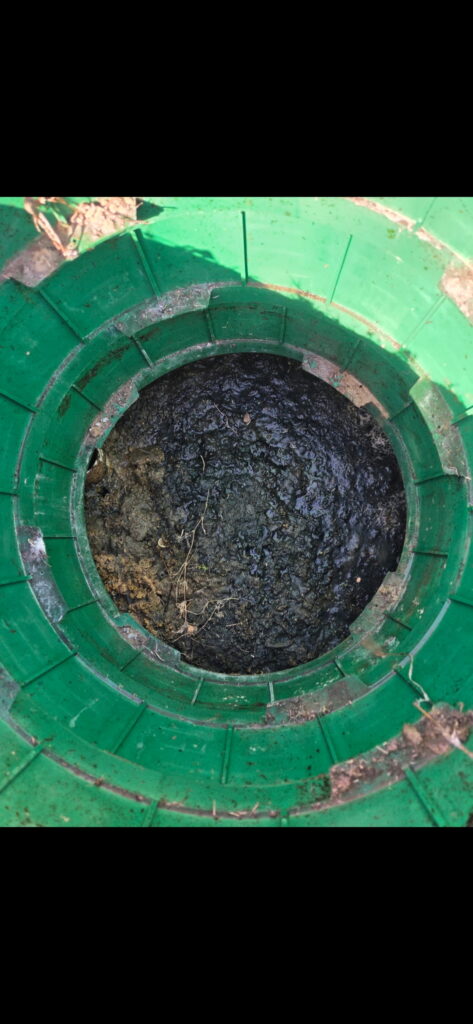
Once the simple checks come up empty, the tank becomes the prime suspect. Pull your service records and count the years since the last pumping. Anything past the four year mark for an average household deserves a professional look regardless of what the drains are doing. Water softener discharge, garbage disposal use, and large families all accelerate sludge accumulation well beyond the standard schedule. If you have never had the tank pumped since buying the home, assume it is overdue. Sludge that reaches the outlet baffle starts pushing solids toward the drain field, which is the single most expensive failure a septic owner can face. Odor is a cheap warning compared to what comes next.
Watch for the supporting symptoms that travel with a full tank. Drains across the house slow at roughly the same time rather than one at a time. Toilets gurgle when the washing machine discharges, and the shower drain bubbles when a nearby toilet flushes. The lowest fixture in the home, often a basement shower or a first floor tub, shows trouble first. Grass over the tank or the field looks noticeably greener and grows faster than the surrounding lawn. Standing water or soft ground appears in the yard even during dry stretches. Any two of these signs together with a sulfur smell means the system is telling you it has run out of room.
A pumping visit does more than empty the tank. A technician measures the sludge and scum layers, inspects the inlet and outlet baffles, cleans or replaces the effluent filter, and checks the condition of the lids and risers. That inspection frequently uncovers the exact source of the odor, since a cracked baffle or a missing gasket is visible only with the tank open. Records from each visit build a maintenance history that helps predict the right interval for your specific household. Skipping pumping to save money almost always costs more within a few years. Regular service is the cheapest insurance a septic owner can buy. Due for service or unsure when your tank was last emptied? Click here for our septic pumping service.
Septic Repairs That Remove a Rotten Egg Smell in Your Bathroom for Good
When pumping alone does not eliminate the odor, the system has a mechanical defect that needs repair. Broken inlet or outlet baffles allow scum and solids to move into places designed to stay clear, disrupting flow and trapping gas. Cracked concrete lids, deteriorated riser seals, and loose cleanout caps let odor escape at ground level where it drifts toward doors and windows. Damaged or crushed sewer lines between the house and the tank leak gas into the soil and sometimes into crawl spaces. Root intrusion is common in older clay and cast iron lines throughout northeastern Oklahoma. Each of these repairs is straightforward for a crew with the right equipment. Diagnosing them correctly is what separates a lasting fix from a repeat call.
Aerobic system repairs follow their own path. Compressors have a service life and eventually stop moving enough air to sustain treatment. Diffusers clog with biofilm and mineral scale, choking the air supply even when the compressor runs fine. Control panels, float switches, and timers all fail with age, and a stuck float can flood or starve the chamber. Spray heads clog with grit and stop distributing effluent evenly across the lawn. Replacing worn components restores the oxygen rich environment that keeps the system nearly odorless. A technician certified on aerobic units can test each part rather than replacing the whole system.
Drain field repairs address the final stage of treatment. Clogged distribution boxes, collapsed laterals, and biomat buildup all reduce the soil’s ability to accept effluent. Compaction from vehicles parked over the field crushes the gravel bed and blocks flow permanently. Trees planted too close send roots directly into the lateral lines seeking water and nutrients. Some fields respond well to jetting, component replacement, or resting one half of the field while the other carries the load. Others have reached the end of their service life and need a new field designed for the soil and the household. A proper evaluation, including soil conditions and system sizing, determines which option applies. Need a repair estimate on a system that keeps smelling? Click here for our septic repair service.
Why You Need a Septic Professional for a Rotten Egg Smell in Your Bathroom
Sewer gas is a warning signal, not a nuisance to be masked. The same odor that annoys you in the bathroom indicates an opening between your waste system and the air your family breathes. Diagnosing that opening requires opening the tank, measuring the layers, testing components, and evaluating the drain field under real conditions. Guessing wrong wastes money and leaves the actual defect in place to grow. A certified septic crew reads the whole system as one connected unit instead of chasing symptoms room by room. That approach fixes the problem the first time and protects the investment sitting under your yard.
Health and Safety Risks Behind a Rotten Egg Smell in Your Bathroom
Hydrogen sulfide is detectable by smell at extremely low concentrations, which is fortunate because it gives early warning. At higher concentrations it deadens the sense of smell entirely, meaning an odor that suddenly disappears is not always good news. Prolonged exposure at moderate levels causes headaches, nausea, dizziness, and eye and throat irritation. Children, older adults, and anyone with asthma or respiratory conditions react sooner and more severely than healthy adults. Sewer gas also contains methane, which is flammable in sufficient concentration inside an enclosed space. None of this is a reason to panic, and it is every reason to stop ignoring the smell.
The gas damages your property as well as your comfort. Hydrogen sulfide converts to sulfuric acid on damp surfaces, which slowly eats concrete tank walls, corrodes metal fasteners, and degrades risers and lids. Systems that vent poorly for years show visible deterioration at the top of the tank where the gas concentrates. Leaking seals also let water reach subfloors, joists, and framing, creating rot and mold conditions in humid Oklahoma summers. Insurance rarely covers gradual damage that a homeowner could have addressed earlier. Catching the leak while it is only an odor keeps the repair in the hundreds rather than the thousands.
Untreated waste reaching the surface creates a public health issue that goes beyond your property line. Effluent surfacing in a yard carries bacteria and viruses that children and pets contact directly. Runoff from a failed field can reach ditches, creeks, and neighboring wells during heavy rain. Oklahoma DEQ regulates onsite wastewater systems specifically to prevent these outcomes. Homeowners with surfacing effluent are responsible for correcting it promptly. Calling a certified company early keeps you compliant and keeps your family safe.
What a Septic Inspection Finds Behind a Rotten Egg Smell in Your Bathroom
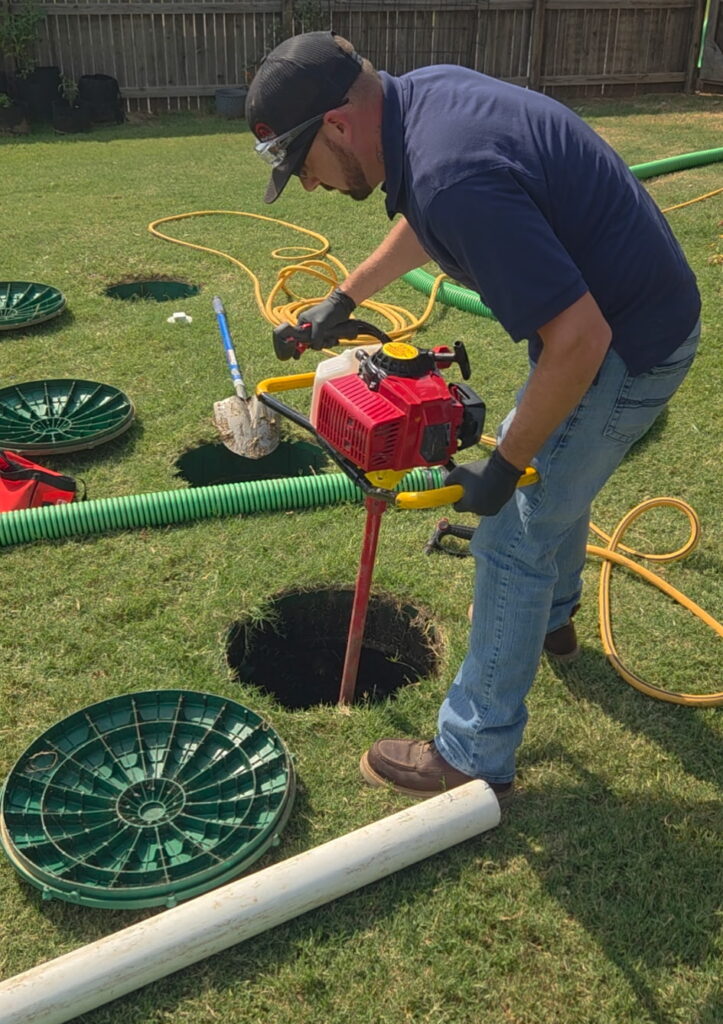
A thorough inspection starts at the fixtures and works outward toward the tank and field. The technician verifies trap seals, tests the vent system, checks the toilet flange, and confirms which fixtures carry the odor. Inside the tank, sludge and scum depths are measured against the tank’s working capacity to determine actual condition. Baffles, filters, lids, gaskets, and risers each get inspected for cracks, corrosion, and missing parts. On aerobic systems the compressor output, diffuser condition, control panel, floats, and spray heads all get tested under load. This process turns a vague complaint into a specific list of findings.
The drain field evaluation matters just as much as the tank. A technician walks the field looking for wet spots, odor at the surface, uneven grass growth, and signs of compaction or root intrusion. Distribution boxes get opened to confirm effluent is spreading evenly across all laterals. Liquid levels in the tank reveal a great deal about how well the field is accepting flow. Recent rainfall, household size, and water fixture count all factor into the assessment. That context prevents a healthy field from being condemned unnecessarily.
The result is a written picture of your system with clear next steps and honest pricing. You learn which repairs are urgent, which can wait, and what your maintenance interval should be going forward. Documentation also proves valuable at resale, since buyers and lenders increasingly request septic records. Homeowners who understand their system make better decisions about water use, landscaping, and additions. Knowledge turns septic ownership from a source of anxiety into routine property maintenance. That is exactly what a good inspection delivers.
Why Choose Martin Septic for a Rotten Egg Smell in Your Bathroom
Martin Septic is DEQ certified for both aerobic and conventional septic systems, which matters because northeastern Oklahoma has plenty of both. Our crews are professionally trained and show up ready to diagnose rather than guess. We provide full service septic solutions with no shortcuts, from pumping and filter service to baffle repair, drain field work, complete installations, and septic design and engineering. Free, no obligation estimates come standard on every visit, so you know the cost before any work begins. As a member of the Tulsa Home Builders Association, we hold our workmanship to the same standard builders expect on new construction. Honest answers and clean job sites are not extras here; they are the baseline.
Septic emergencies do not schedule themselves around business hours, and neither do we. Martin Septic offers emergency septic service day or night for backups, alarms, and odors that cannot wait until Monday. We serve homeowners across Inola, Claremore, Catoosa, Verdigris, Owasso, Collinsville, Pryor Creek, Wagoner, Coweta, Broken Arrow, Bixby, Jenks, and Tulsa. Local experience means we know the soil conditions, the water table behavior, and the common system types in each of these communities. That familiarity shortens diagnosis time and keeps costs down. You get a straight answer and a real solution instead of a sales pitch.
If a rotten egg smell has taken over a bathroom in your home, do not wait for it to turn into a backup or a surfacing drain field. Let a certified crew locate the source, explain what they found, and fix it correctly the first time. We will walk you through the findings, quote the work up front, and stand behind it. Regular maintenance after the repair keeps the odor from returning and extends the life of your entire system. Call Martin Septic at (918) 640-2298 or email info@martinsepticok.com to schedule your free estimate today.